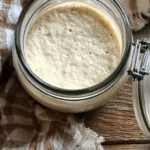
Sourdough Starter From Scratch Recipe
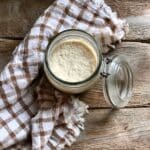
Learn how to make a sourdough starter from scratch with this easy step-by-step recipe. This natural fermentation process creates a bubbly and active starter perfect for baking delicious homemade sourdough bread, cookies, and other baked goods. With daily feeding and care, your starter will develop a light and clean sourdough aroma, making it ready to use within two weeks.
- Prep Time: 10 minutes
- Cook Time: 0 minutes
- Total Time: 14 days (including fermentation and feedings)
- Yield: Approximately 1 to 2 cups of sourdough starter 1x
- Category: Breakfast
- Method: No-Cook
- Cuisine: American
Ingredients
Scale
Ingredients
- 1/2 cup bread flour (organic if possible; whole grain or whole wheat flour can also be used)
- Filtered water as needed (approximately 1/2 cup to 1/4 cup per feeding)
Instructions
- Day 1: Mix Starter – In a clean wide-mouth jar, combine 1/2 cup bread flour and 1/2 cup filtered water. Stir vigorously with an offset spatula or fork, scraping down the sides of the jar to incorporate all flour. Cover the jar with plastic wrap secured by a rubber band or the jar’s lid.
- Day 2: Check Activity and Feed – After 24 hours, check your starter for any bubbles indicating fermentation. If active, discard half of the starter into the trash. Feed the remaining starter with 1/2 cup bread flour and 1/2 cup filtered water. Stir well and cover again.
- Day 3: Discard and Feed – Discard half of the starter, disposing of it in the trash. Feed the starter with 1/2 cup bread flour and 1/4 cup filtered water. Stir thoroughly, scrape down the sides, and cover the jar.
- Days 4 to 10: Daily Feedings – Repeat the process each day: discard half of your starter and feed with fresh flour and water. Your starter should become increasingly bubbly, active, and start doubling in size within hours after feeding. Be patient if activity is slow at first.
- Ready to Use – Your sourdough starter is ready to bake with once it consistently doubles in size within 4-8 hours after feeding and emits a light, clean sourdough aroma. This typically occurs by around day 14. Consider moving your starter to a larger container to maintain a larger quantity for ongoing baking and discard recipes.
Notes
- Use a scale for more precise feeding measurements if available, especially helpful for consistent results.
- The starter may take longer than 10 days to become fully active depending on environmental factors; patience is key.
- Keep the starter in a warm, draft-free area to promote fermentation.
- Discarded starter should be thrown away and not added back into the feed to avoid buildup of unwanted bacteria.
- Once established, you can refrigerate your starter and feed it weekly if not baking frequently.
Keywords: bread, sourdough, sourdough starter, fermentation, homemade bread
Find it online: https://kitchenbynora.com/sourdough-starter-from-scratch-recipe/